
Add your material.
Lecture slides, your notes, the set textbook, and any past papers you can get hold of. All of it goes on one shelf. That is the whole setup.
Your shelf
Mechanics lecture notes.pdfReady
Finals, 2024.pdfRead

AI tutor to ace your exams
Tura teaches from your own lecture notes and textbooks, in the shape your past papers ask, so the understanding is real and the marks follow it.
Most revision keeps those two apart: work through the notes all semester, then find out what was actually asked in the week before finals. Tura keeps them on one shelf, so what you study tonight is decided by what the paper has asked before.
Open Tura
How it works
Setting up a module takes about a minute. After that it is one screen: the next thing to learn, and something to answer.
Lecture slides, your notes, the set textbook, and any past papers you can get hold of. All of it goes on one shelf. That is the whole setup.
Tura reads every question on your papers and works out which topics carry the marks, and which ones your lecturer never covered.
Work through the topics that matter most, in order. Then sit a short mock on what you have just learned and see the result in marks.
Six screens from the real product, not a mock-up.
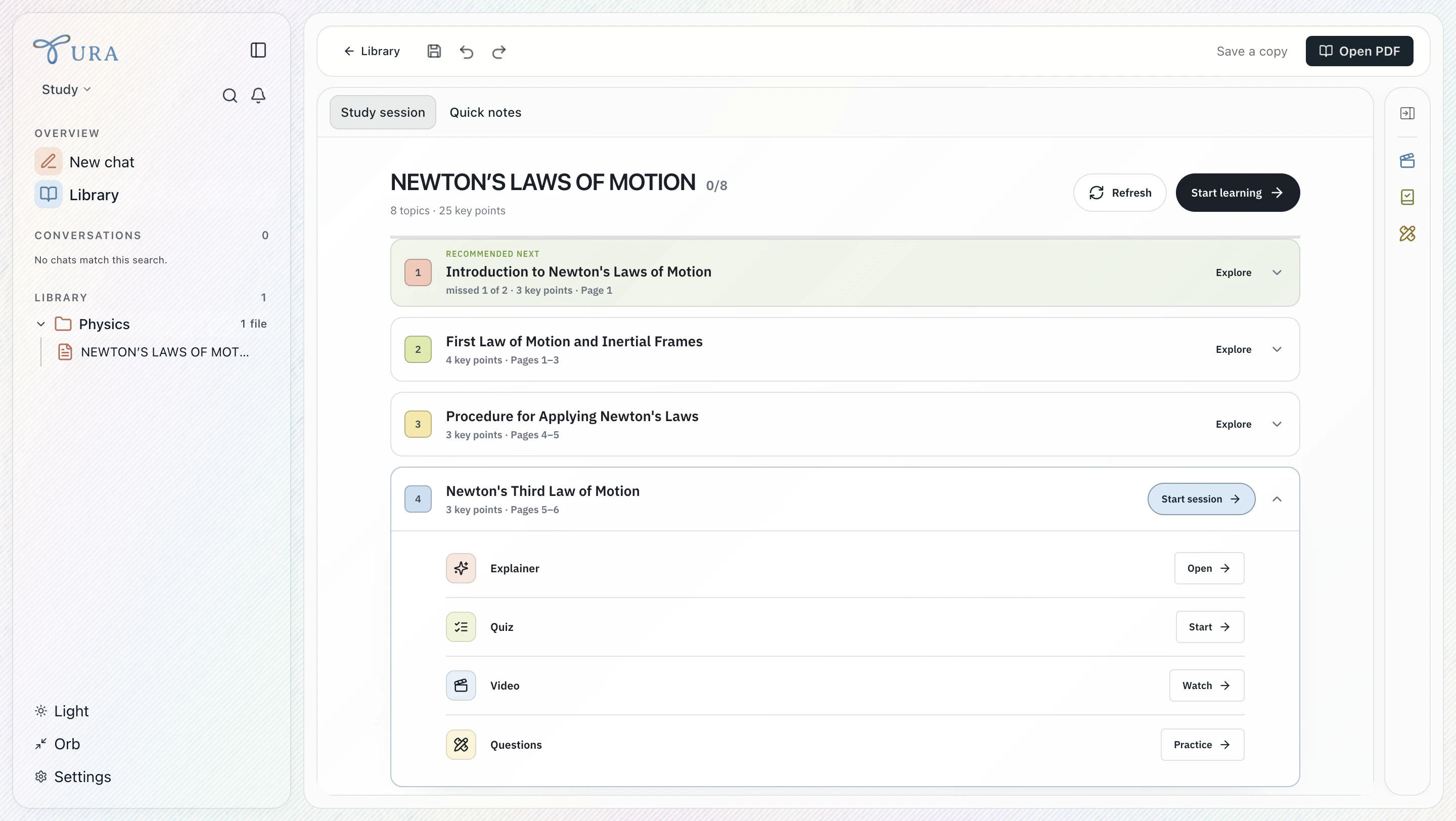
Study route
Your course in the order worth studying it. What your papers ask about most comes first, arranged so nothing arrives before the thing it depends on.
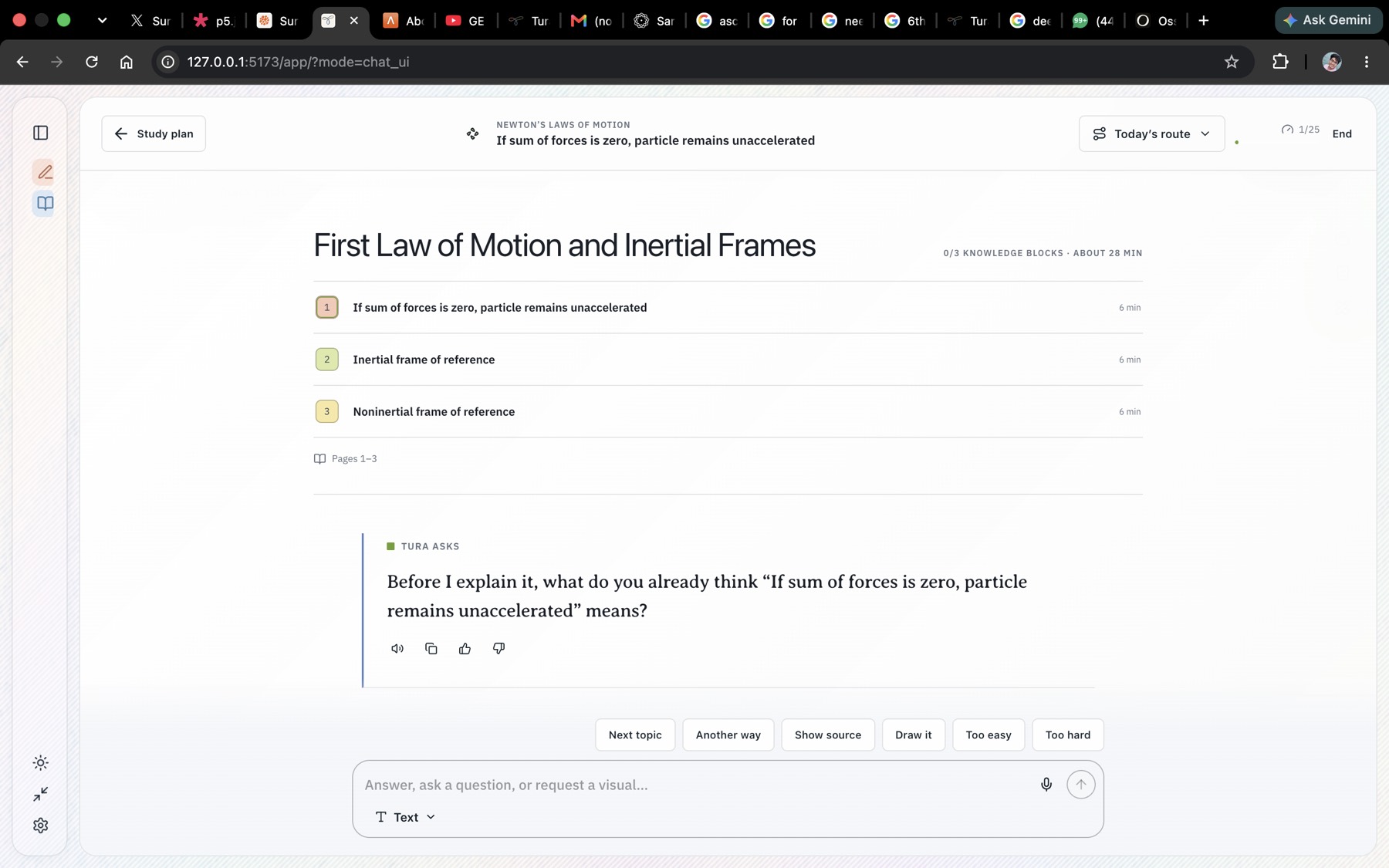
Your exam
Tura reads each question on your paper, works out which topic it belongs to, and shows you the ones your own material never covers.
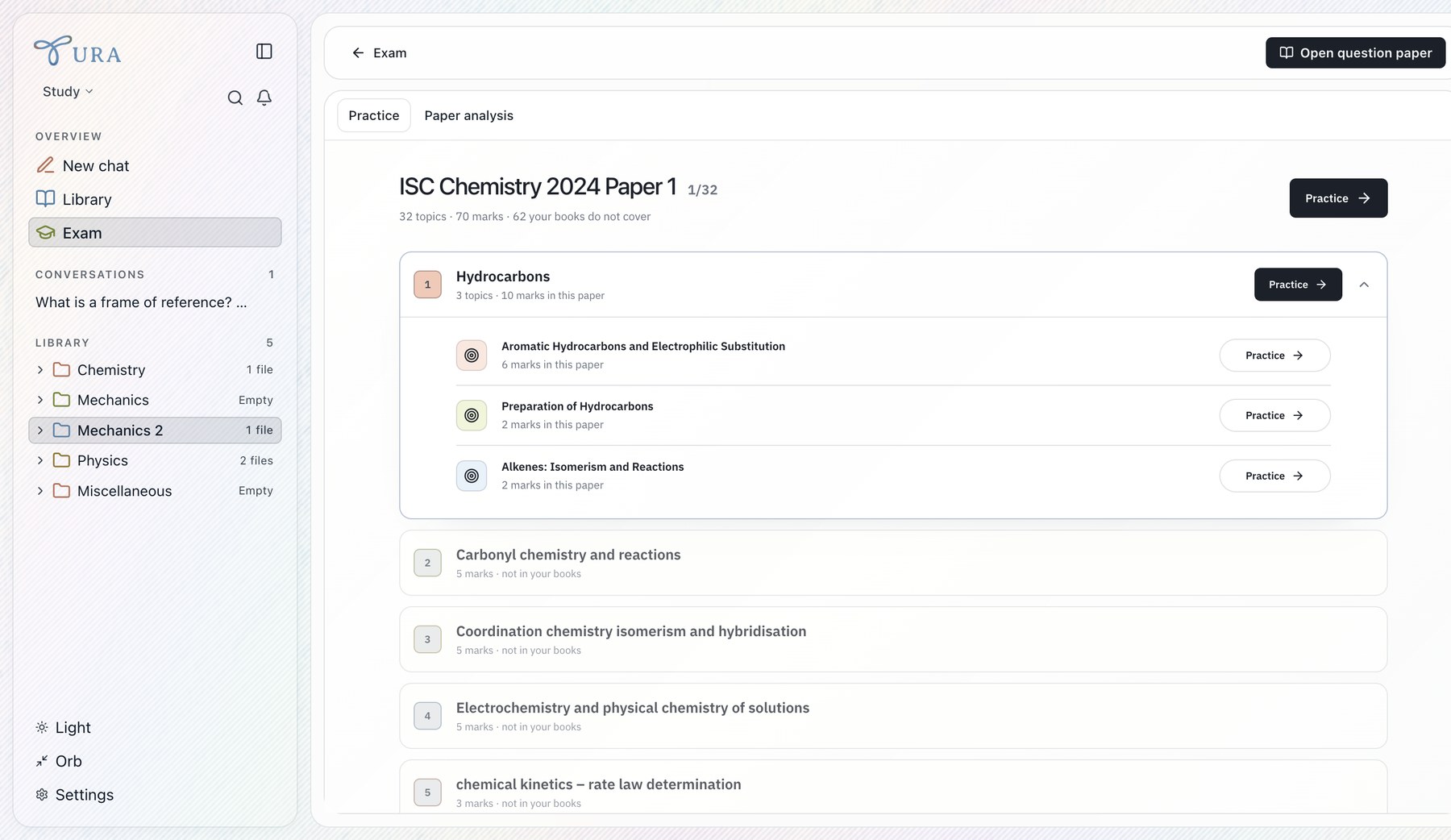
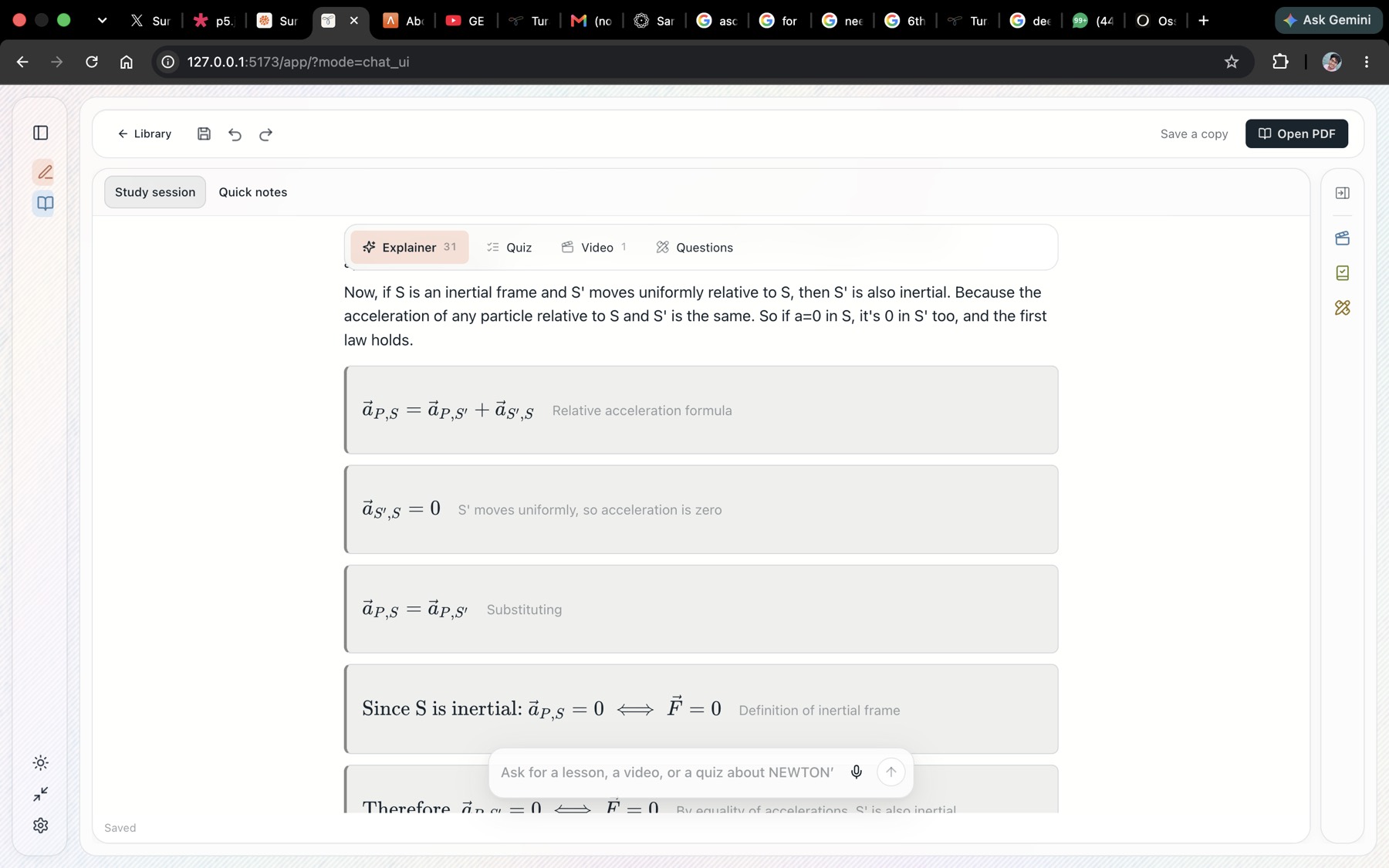
Explainer
The idea, the working, and the page it came from, in one place, so you can check what you were told against the source.
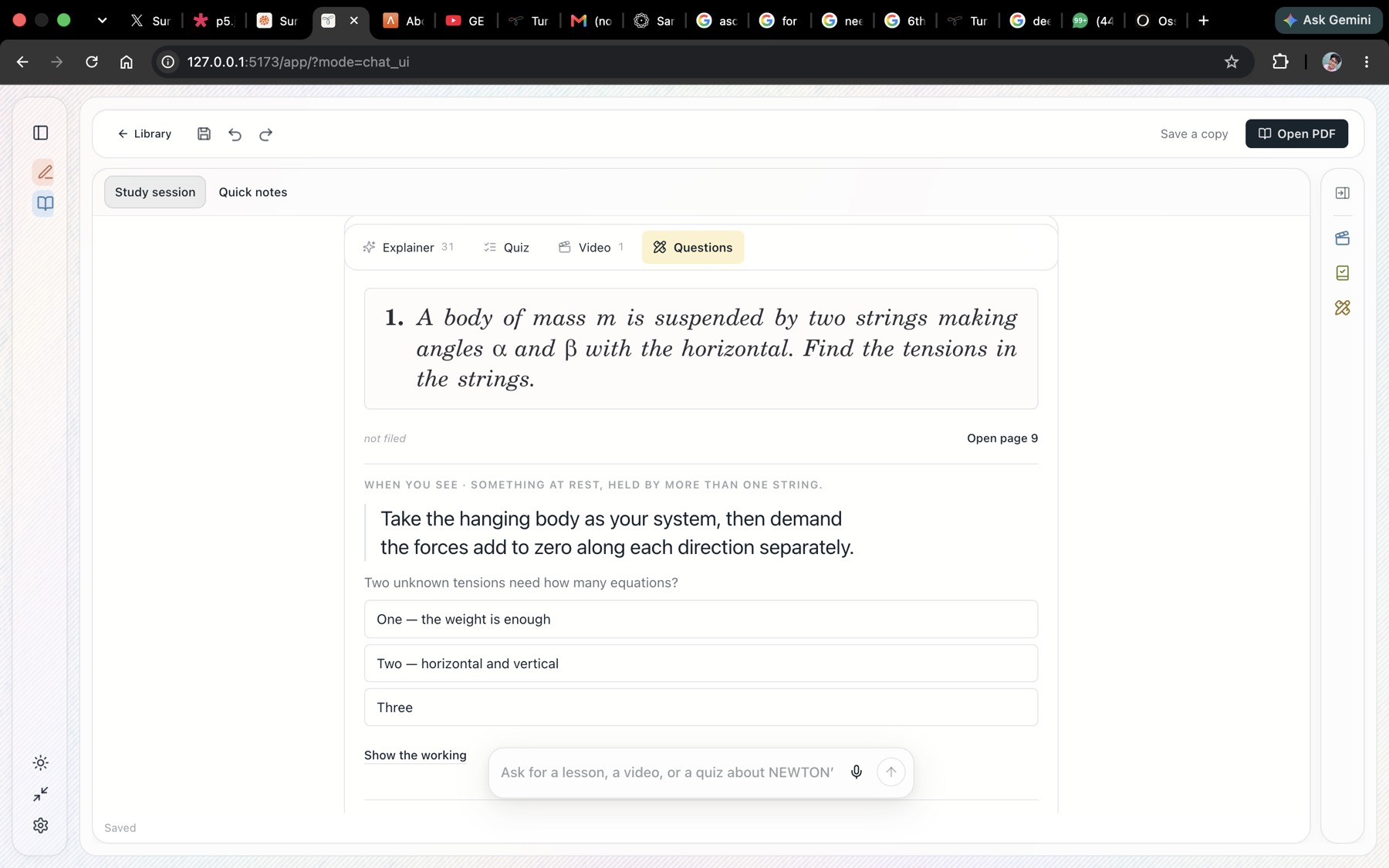
Practice
The same form and the same marks as your paper, answered a step at a time, with the reason you were right or wrong.
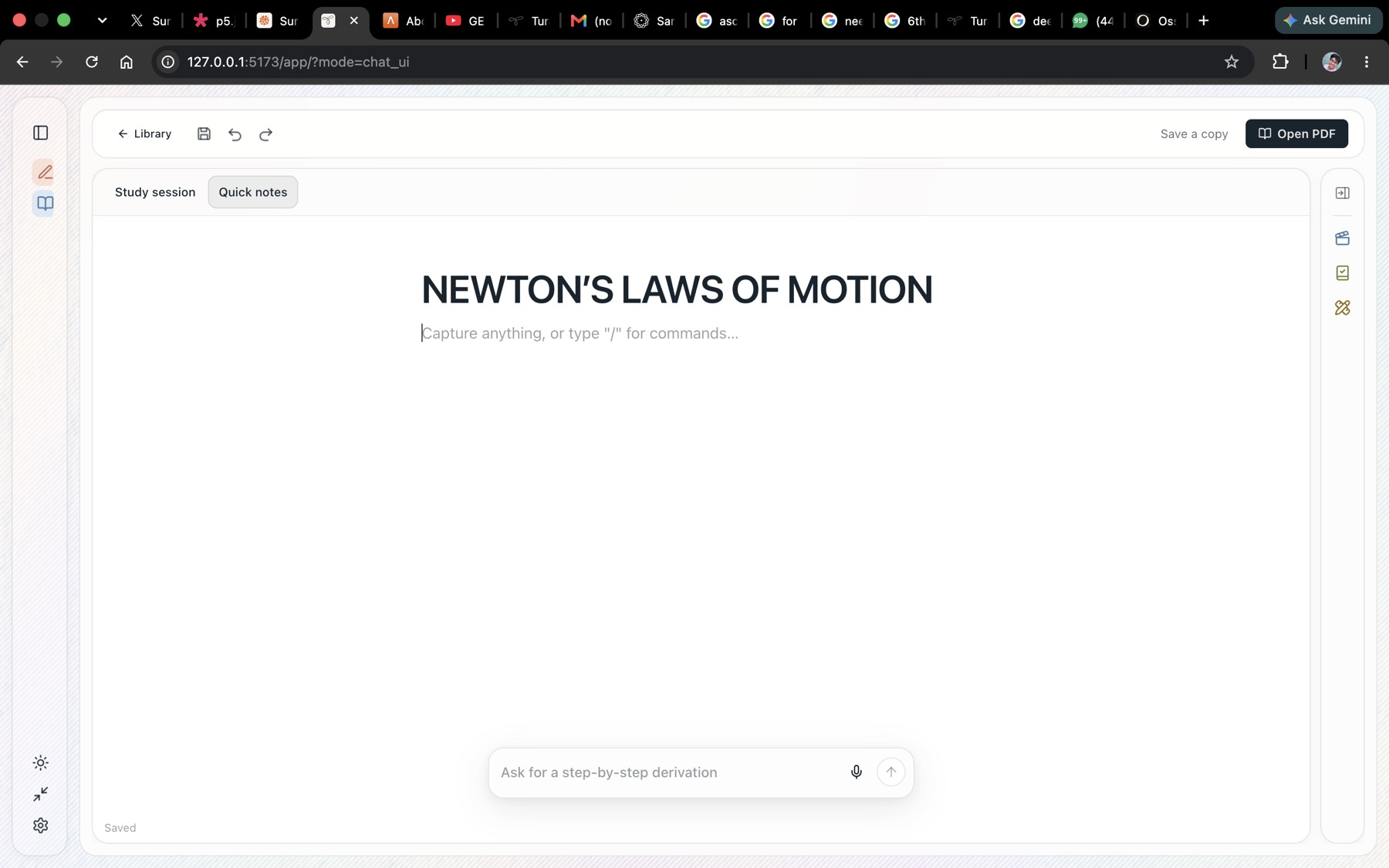
Quick notes
Write something down without leaving the page. Notes stay attached to the topic and are there the next time you open it.
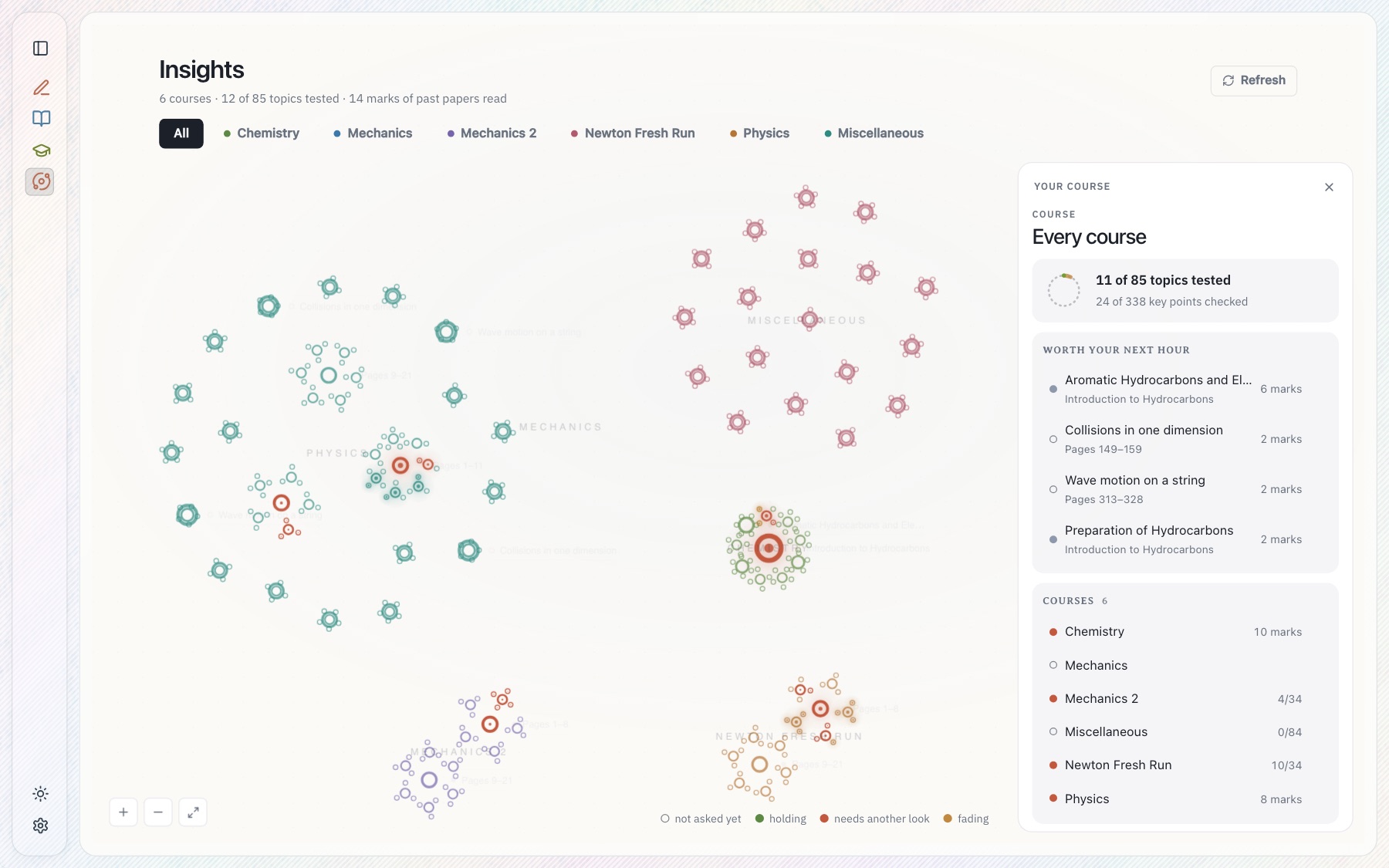
Insights
Every topic becomes a ring of its key points, lit by what your answers show: holding, fading, or worth another look. Underneath is Dhee, Tura’s memory layer: it remembers where you struggled, so you never start again from zero.
Questions
Tura works from your notes and readings alone. It turns them into a course, teaches the topics, and sets practice from the questions your material prints. Past papers make it sharper, not usable. Add one whenever you get hold of it, and everything reshapes around it.
Three ways. The order changes, so the topics carrying the most marks come first. The difficulty changes, so a question is pitched where your paper pitches it rather than at a generic level. And the practice changes, so you are answering the kind of question you will actually be set. Add a second paper and it all adjusts again.
Tura tells you. When a question on your paper is about something none of your material explains, such as a lecture you missed or a reading nobody set, it is flagged rather than quietly skipped, so you find out now instead of in the exam hall.
Teaching comes from your own material, and a solution is only ever shown when it comes from the paper’s own answer key or from a source Tura can quote and cite. When neither exists, it says so rather than inventing something plausible. A confident wrong answer is the one thing a revision tool must never give you.
In marks. Every mock you sit is kept, so you can see the run of them rather than one number: what you scored, which topics lost you the marks, and whether it is getting better. That is a different question from “how much have I covered”, and it is the one that matters the week before.
Any module you have material for. Tura reads what you give it rather than shipping a fixed syllabus, so a maths module, a law module and a physiology module all work the same way, and you can run several of them at once.